

Western Montana’s history lives not only in well-known landmarks, but also in small museums tucked into quiet valleys and rural communities. These lesser-known cultural sites offer meaningful opportunities to explore the stories that shaped Glacier Country—from American Indian heritage and homesteading life to early industry, community traditions and regional art.
Visiting these museums is a chance to slow down, connect with this place and better understand the people and landscapes that continue to define this part of the state. Each offers a unique perspective and a warm welcome rooted in local pride.
BITTERROOT CORRIDOR
Hamilton’s Ravalli County Museum & Historical Society blends art, cultural and natural history to tell the story of the Bitterroot Valley. Exhibits highlight American Indian culture, westward expansion and the travels of the Lewis and Clark Expedition. The museum also serves as a community gathering place, hosting events and educational programs throughout the year. Its location at the crossroads of several nationally significant historic and geologic trails underscores the valley’s importance in regional history.
BLACKFOOT CORRIDOR
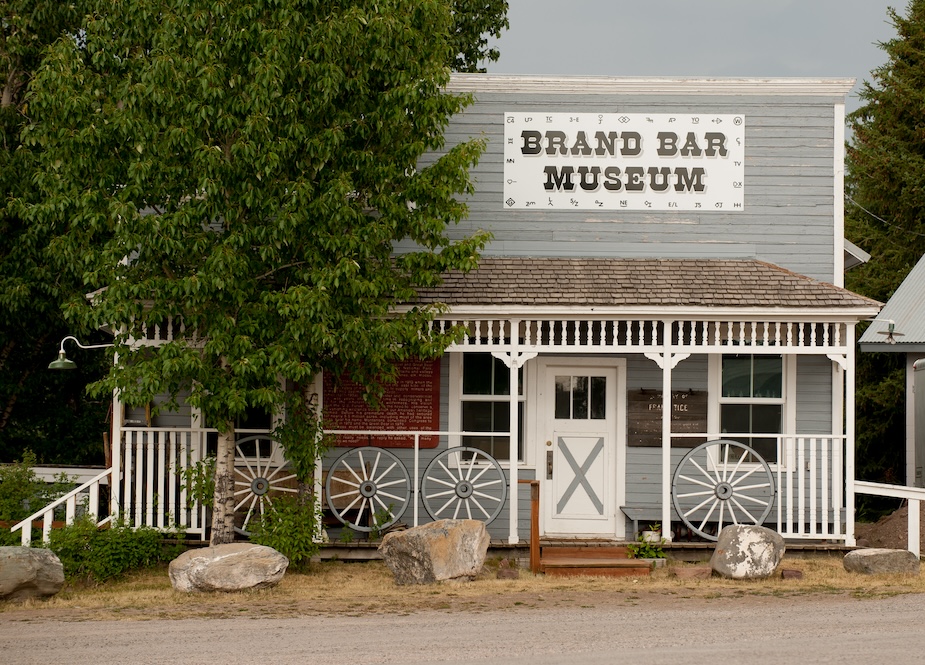
In the small community of Ovando, the Brand Bar Museum preserves local history inside a former saloon once known as the “Bucket of Blood.” Today, the museum houses memorabilia, antiques and stories from the town’s early days. A historic jail remains on site, and visitors can arrange an overnight stay in one of its bunks or camp nearby. Access is informal and community-driven—reflecting the spirit of Ovando itself.
CLARK FORK CORRIDOR
Open seasonally in the town of Hot Springs, the Larue-Hot Springs Museum honors homesteader life and community traditions. Collections include American Indian artifacts, historic uniforms, agricultural equipment, early vehicles and personal memorabilia from local residents. Visitors can explore a historic cabin and the original concrete jail, gaining insight into everyday life in this portion of the Clark Fork Valley.
Housed in one of the oldest buildings in Sanders County, the Old Jail Museum in Thompson Falls offers a look into early mining, logging, farming and ranching life. Formerly the county jail, sheriff’s office and residence, the building now displays photographs, maps and artifacts that document the region’s settlement history. A visit pairs well with time along the Clark Fork River or nearby public lands.
EAST GLACIER CORRIDOR
The Glacier County Historical Museum and Archive in Cut Bank spans 14 acres and features multiple exhibit buildings and historic structures. Collections include Blackfeet artifacts, homesteading displays, oil industry history and exhibits highlighting local artists and businesses. Outdoor exhibits—such as a 1917 schoolhouse, a 1980s caboose, and a living-history interpretive replica homestead house and farm—bring early community life into focus.
Located in Browning, the Museum of the Plains Indian showcases historic and contemporary art created by tribal members of the Northern Plains. Exhibits include traditional clothing, ceremonial items and works by modern American Indian artists. The museum offers an important opportunity to engage with the cultural continuity and creative expression of the region’s tribes.
FLATHEAD CORRIDOR
Near Charlo in the Mission Valley, Ninepipes Museum of Early Montana preserves the history and culture of the Flathead Indian Reservation and the Confederated Salish and Kootenai Tribes. Exhibits include American Indian beadwork, historic photographs, Old West art and a wildlife diorama depicting an early camp scene. The museum’s location near the Ninepipe National Wildlife Refuge and CSKT Bison Range makes it an ideal stop for a full day of exploration.
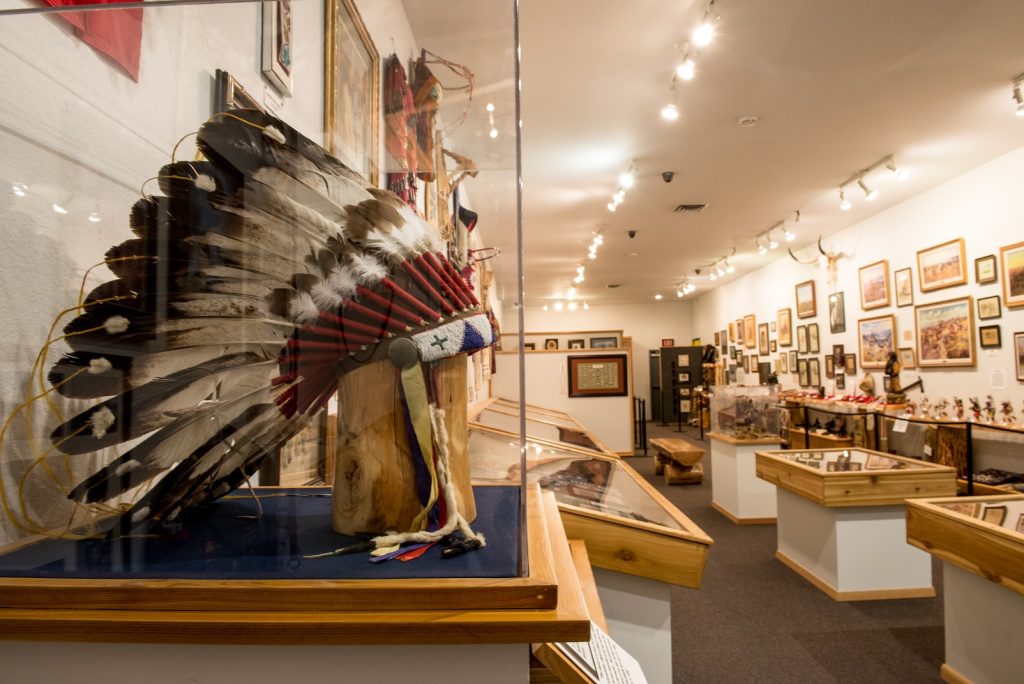
Polson-Flathead Lake Museum in Polson offers insight into homesteading life around Flathead Lake. Exhibits include stagecoaches, a trading post, pioneer kitchens and firefighting equipment, as well as the Flathead Lake Monster—a 7.5-foot, 181-pound sturgeon once pulled from the lake in 1955. Many of the historic vehicles on display remain in working condition, adding to the museum’s hands-on appeal.
NORTHWEST CORRIDOR
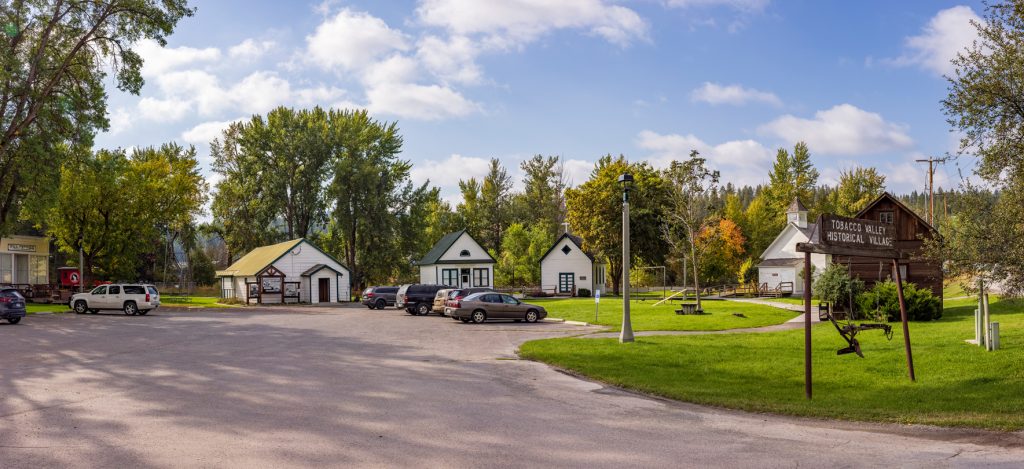
Located along the Tobacco River in Eureka, the Tobacco Valley Historical Village features a collection of restored buildings from the late 19th and early 20th centuries. Visitors can explore a schoolhouse, general store, railroad depot, fire tower and log cabins, all furnished with period artifacts. The adjoining Eureka Riverwalk Trail invites visitors to extend their time in the valley.
The Troy Museum and Visitor Center highlights the cultural and natural history of Troy, including homesteading, mining, logging and the impact of the 1910 fire. Interactive displays and an on-site disc golf course make it a welcoming stop for visitors of all ages.
SEELEY SWAN CORRIDOR
Housed in the former Double Arrow Ranch barn, the Seeley Lake Historical Society and Visitor Center preserves the history of the Seeley Swan Valley. Outdoor exhibits include historic wagons, canoes, a Blackfeet lodge and a botanical garden. Inside, restored horse stalls feature themed displays that explore logging, fire history, regional literature and winter life in the valley.
Please note: We ask that all our visitors and residents recreate responsibly by being mindful of the following: know before you go; plan ahead; play it safe; leave no trace; tread lightly; and help build an inclusive outdoors.
Updated March 16, 2026
March 7, 2018
Related: About, American Indian, Arts and Culture, Blackfeet Indian Reservation, Blackfeet Nation, Browning, Charlo, Cut Bank, Eureka, Flathead Indian Reservation, Hamilton, Hot Springs, Indoor Fun, Montana, Museums, Ovando, Polson, Seeley Lake, Thompson Falls, Troy
Comments