

Spring in Western Montana brings longer days, quiet trails and a sense of renewal across Glacier National Park. While summer and winter each hold their own magic, spring offers something uniquely special—open spaces, uncrowded viewpoints and opportunities to experience the park at a slower, more mindful pace. One of the season’s most memorable experiences is biking the Going-to-the-Sun Road before it opens to vehicles.
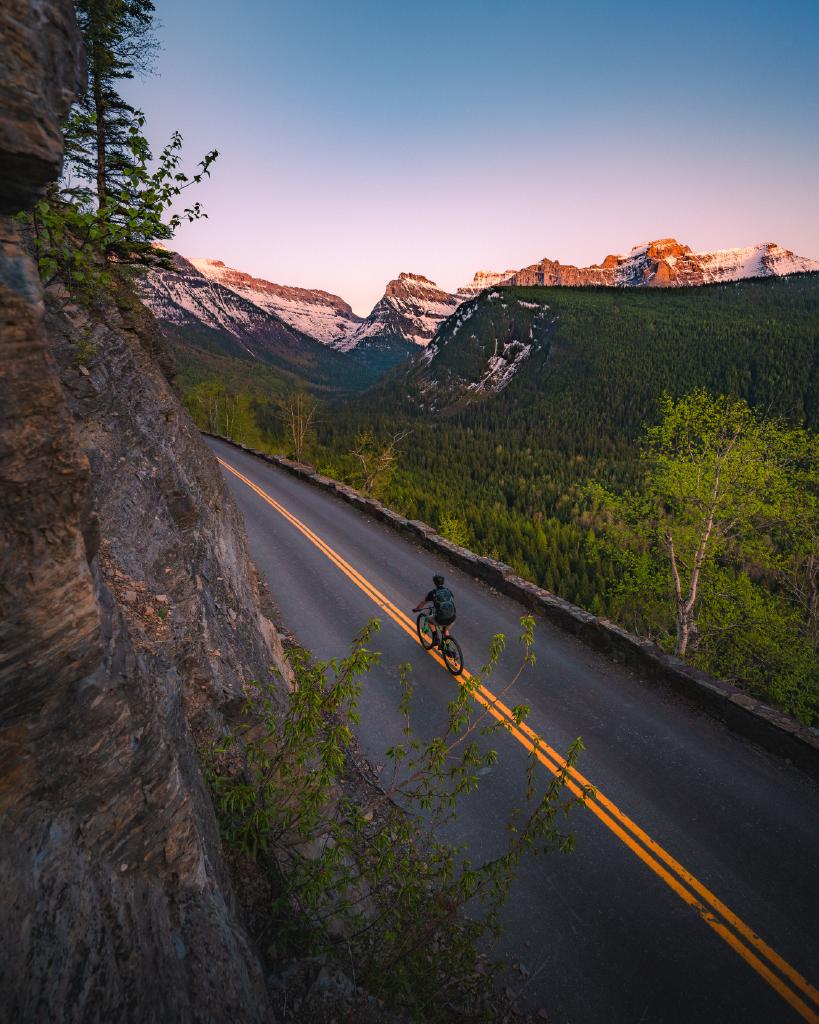
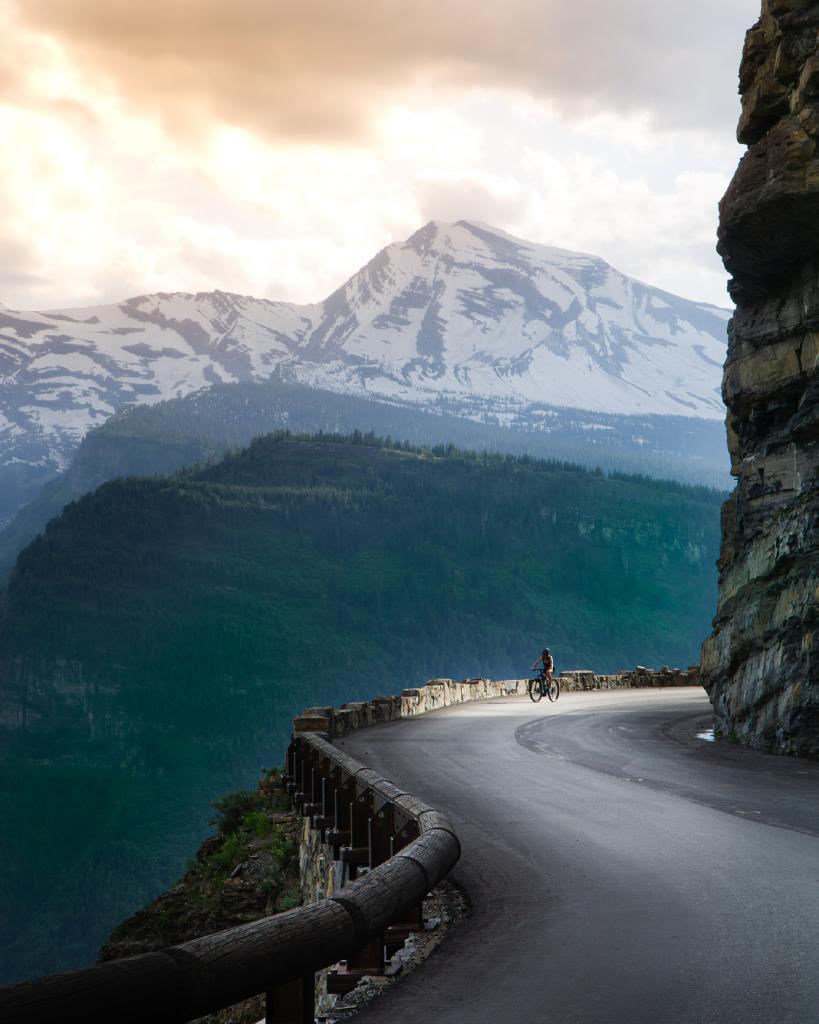
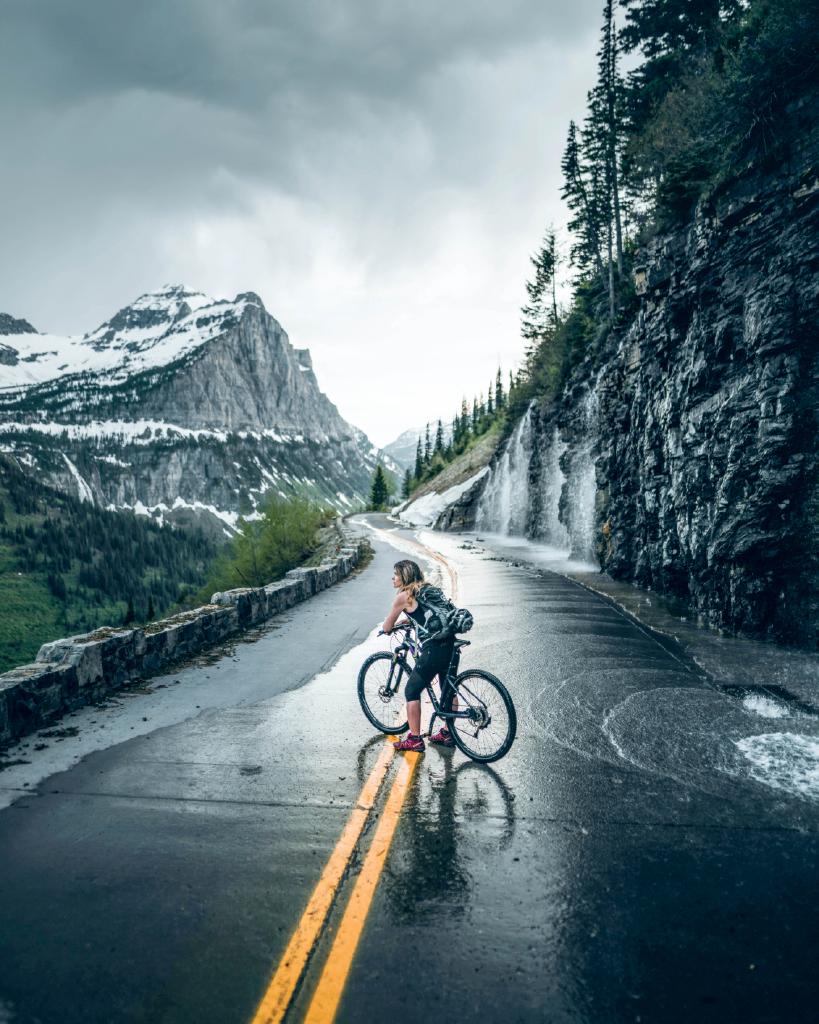
Each year, as plow crews work to clear winter snowpack from Logan Pass, sections of the road are temporarily open only to cyclists and pedestrians. This short window—typically from April through mid-June—provides an exceptional way to explore the park by bike, with snow-covered peaks above and the sound of waterfalls below.
While biking independently offers a peaceful, self-paced experience, riding with a guide can deepen your connection to the landscape. Knowledgeable guides share insights about wildlife, geology and native plants.
WHAT TO KNOW ABOUT SPRING BIKING THE GOING-TO-THE-SUN ROAD
Check the Daily Road Status
Spring access changes frequently. Portions of the road open as plowing progresses, and the National Park Service updates conditions each day, including road closures. Always check the current status before you go.
Navigating the Road
On the west side, you will drive 16 miles from the start of the Going-to-the-Sun Road to Avalanche Creek. From there, you can start biking until you wish to turn around or until you reach the road closure; road crews are usually working Monday through Thursday until 4 p.m. Bikers are prohibited from going past the road crews when they are working. Friday through Sunday, visitors may continue on until they see an Avalanche Hazard Closure sign. Many people turn around at The Loop, which is 7.8 miles one way with 881 feet in elevation gain. Later in the season you may be able to ride all the way to Logan Pass, which is 15.5 miles in with 3208 feet of elevation gain. The starting point on the east side varies; check road status. Find out about distances and elevation here.
Bring or Rent a Bike
You’re welcome to bring your own bike or rent one locally. Quality road and e-bike rentals are available through Glacier Guides and Montana Raft in West Glacier, Montana E-Bikes and More in Whitefish, Wheaton’s Cycle in Kalispell, Glacier Hikes & Bikes in Columbia Falls and Sky Eco in Coram.
Consider a Guided Ride
Guided biking experiences provide support, local insight and an added layer of safety. Guides can share information about native plants, wildlife activity and the park’s natural history—enhancing the journey while handling logistics. Consider a trip with Glacier Hikes & Bikes or Glacier Guides and Montana Raft.
Pay for a Bike Shuttle
Skip the hassle of trying to find parking at Avalanche and pay to be shuttled to the Avalanche starting point. Glacier Guides runs round-trip shuttles leaving from their West Glacier location, where you can leave your car in their parking lot. Glacier Hikes & Bikes provides shuttles from their Columbia Falls location.
TIPS FOR A SAFE AND MEMORABLE RIDE
- Dress in layers. Spring temperatures can vary significantly by elevation and time of day.
- Carry bear spray and know how to use it. Wildlife is active in spring.
- Bring water, snacks and sun protection. Shade can be limited, and snow-reflected sun is strong.
- Be prepared for changing conditions. Snowmelt, runoff and weather shifts are part of the spring experience.
- Start early. Morning rides offer quieter conditions and more predictable weather.
Please note: We ask that all our visitors and residents recreate responsibly by being mindful of the following: know before you go; plan ahead; play it safe; leave no trace; tread lightly; and help build an inclusive outdoors.
April 20, 2026
Related: Biking, Glacier National Park, Montana, Outdoor Fun, Spring Fun, Vacation, West Glacier
Comments