

One of the best parts of Western Montana is sharing space with wildlife. Our region is one of the most intact ecosystems in the lower 48, so chances are good you’ll spot animals while you’re here. As you do, remember that wildlife is just that—wild. Enjoy them from a safe distance, and always act responsibly.
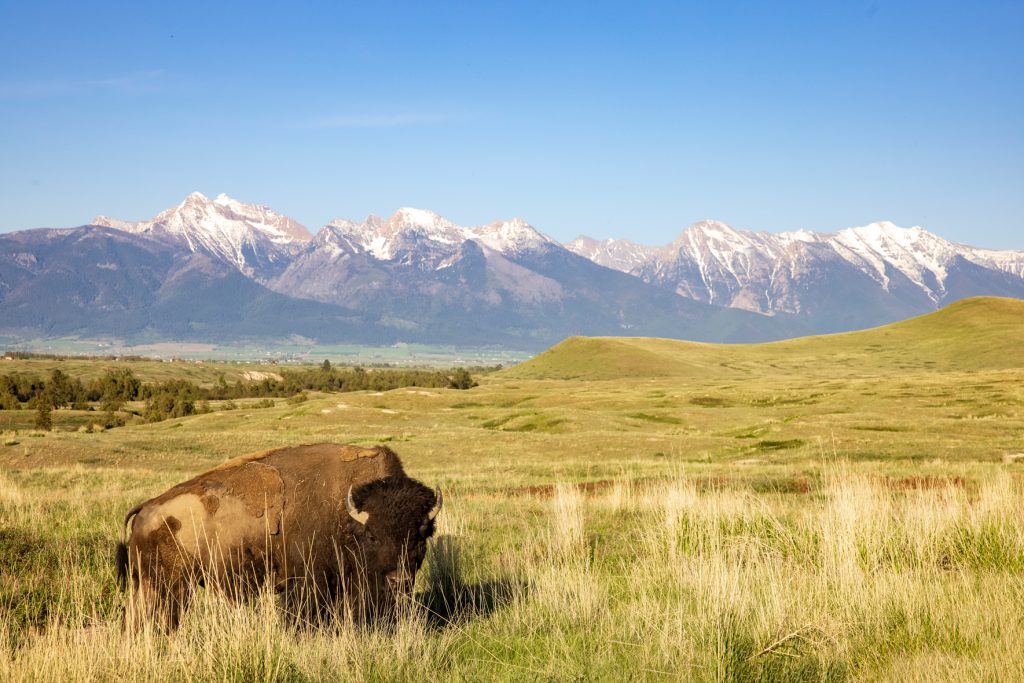
AMERICAN BISON
Bison are the iconic image of the West. These massive herbivores can weigh up to 2,000 pounds and run 40 mph despite their size. Their curved horns reach 2 feet long, and you may hear them called “buffalo,” a term used by American Indians. Visit the CSKT Bison Range in Moiese to see them and learn more about their history and habitat.
BEARS
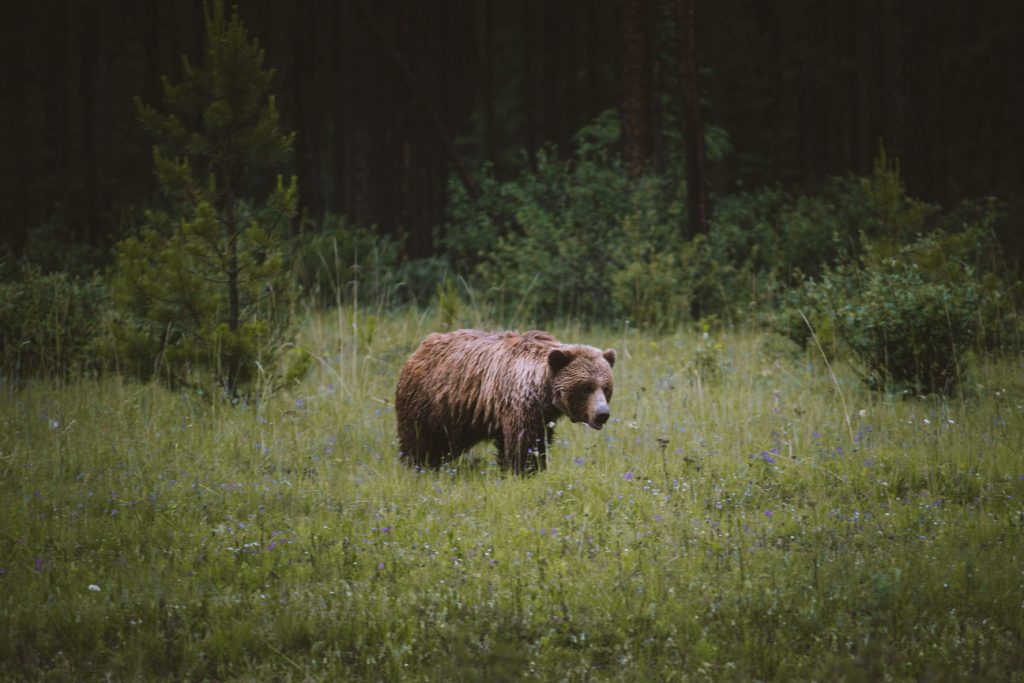
Western Montana is home to both black and grizzly bears. Black bears—whose colors range from black to cinnamon—have a straight snout and a high point at their rump. They typically weigh between 200 and 600 pounds and eat fruits, nuts, insects, fish and small mammals. Grizzlies are larger, with a shoulder hump, upturned snout, and strong forearms for digging. They can weigh up to 1,500 pounds and reach speeds of 35 mph. Though grizzlies sit atop the food chain, much of their diet—like that of black bears—consists of berries, roots, insects and fish, with occasional mammal meat. Females (sows) with cubs are highly protective—never get between them. Always store food properly and follow bear safety guidelines; food left out attracts unwanted visitors.
BIGHORN SHEEP
You’ll find bighorn sheep in Western Montana’s steep mountain terrain. Males (rams) can weigh 400 pounds and sport curled horns that can grow up to 45 inches and weigh 30 pounds. Females (ewes) have smaller horns. Rams establish dominance by clashing horns—a sound that echoes through the canyons. Visit the Koo-Koo-Sint Bighorn Sheep Viewing Site in November and December to see them in action.

DEER
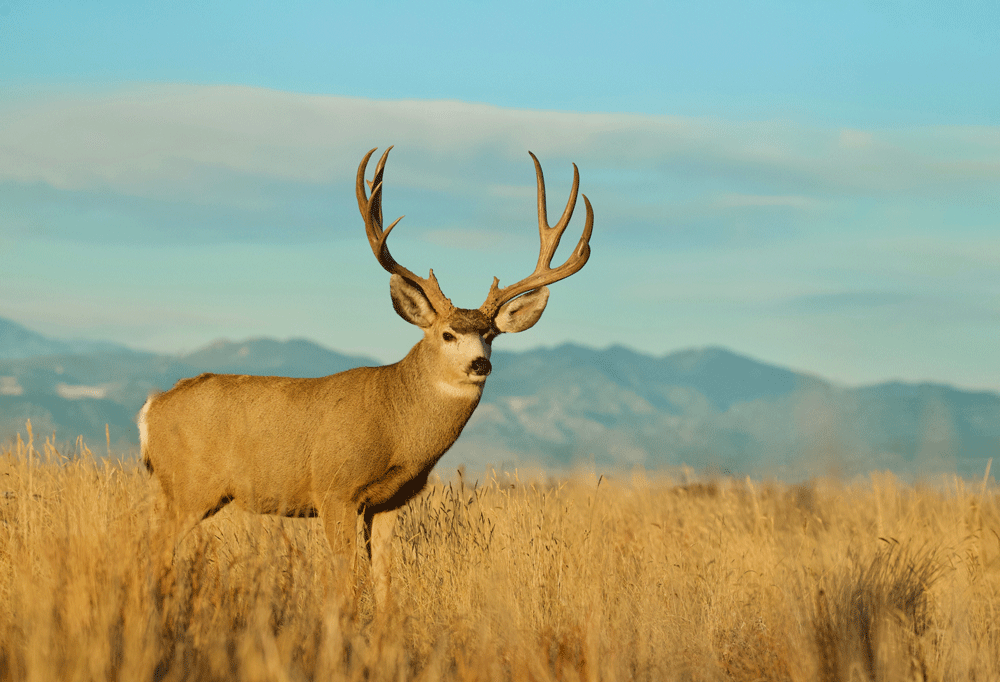
Montana is home to mule and white-tailed deer. Mule deer have large, “mule-like” ears and forked antlers. Their coats shift from gray in winter to brown in summer. White-tailed deer have reddish summer coats and the characteristic white underside and tail that flashes as they run. They favor riparian areas and sometimes wander into town. Both species are agile and fast, capable of 30 mph sprints and 10-foot leaps.
ELK
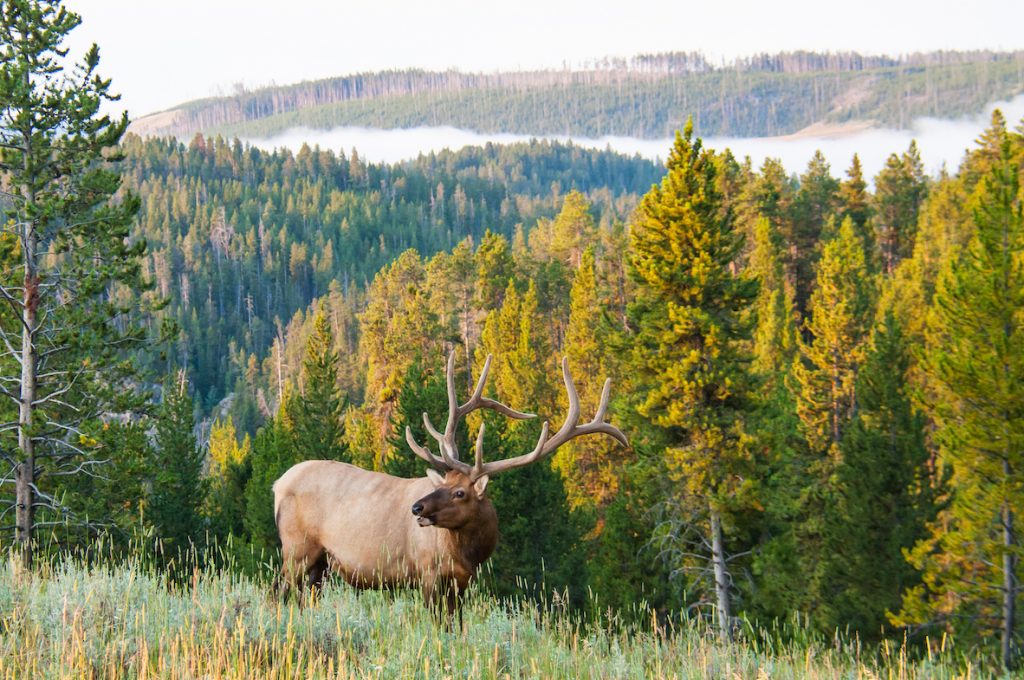
Rocky Mountain elk are common in Western Montana. Bulls can weigh up to 700 pounds, with antlers that reach 40 pounds. Cows do not have antlers. Elk are known for their bugling sounds during the fall rut, when bulls gather and guard harems of females and calves. Learn more about these majestic animals at the Rocky Mountain Elk Foundation in Missoula.
MOOSE
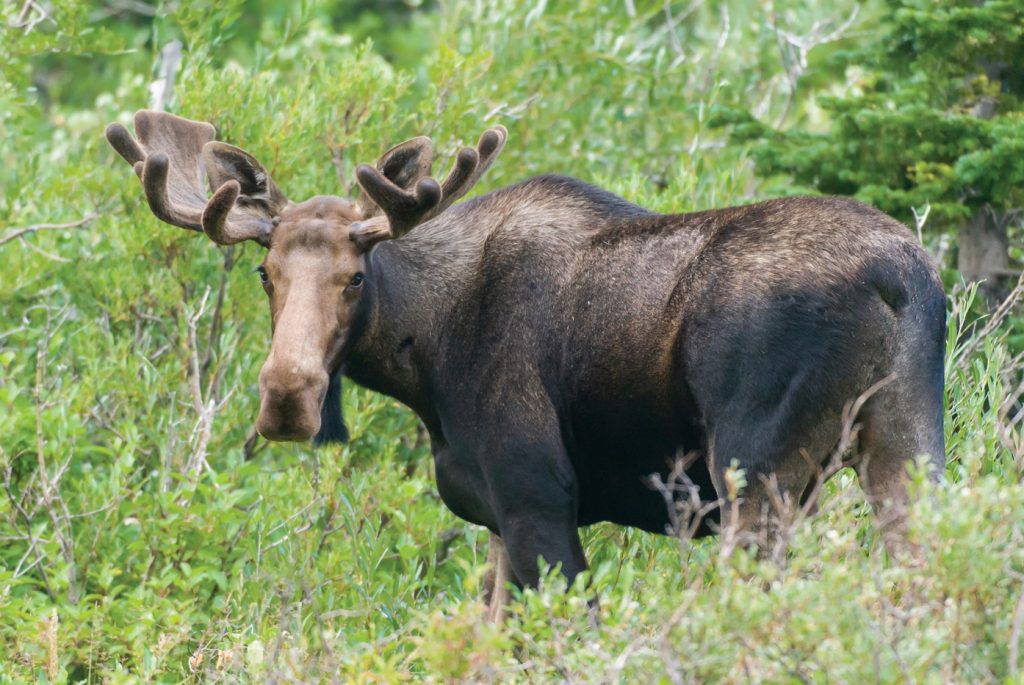
The largest antlered animal in the world, a male moose can stand 6 feet tall, weigh between 1,200 and 1,600 pounds, and have antlers, while females may reach 800 to 1,300 pounds. Male moose antlers can span up to 6 feet wide. Moose generally live in forested areas, spending their time in meadows and marshy areas during the summer months. Moose are also noted for their incredible swimming ability; they can hold their breath underwater for 30 seconds. Their diet typically consists of underwater vegetation, as well as leaves, twigs, tree buds, and tree bark. If you encounter a moose, use caution as male bulls may be aggressive and female cows are incredibly protective of their young.
MOUNTAIN GOATS
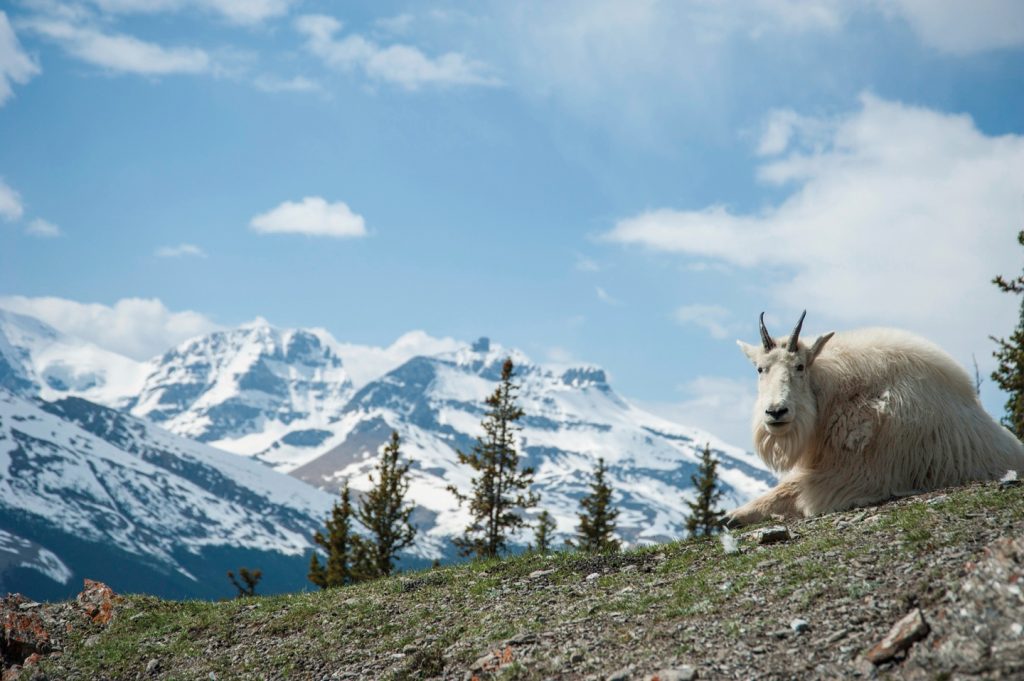
Often spotted around Logan Pass in Glacier National Park, mountain goats are powerful climbers that navigate steep cliffs with ease—even newborns can climb within a day of birth. Both males and females have horns, and their thick white coats and beards help them withstand Montana’s cold alpine winds.
MOUNTAIN LIONS
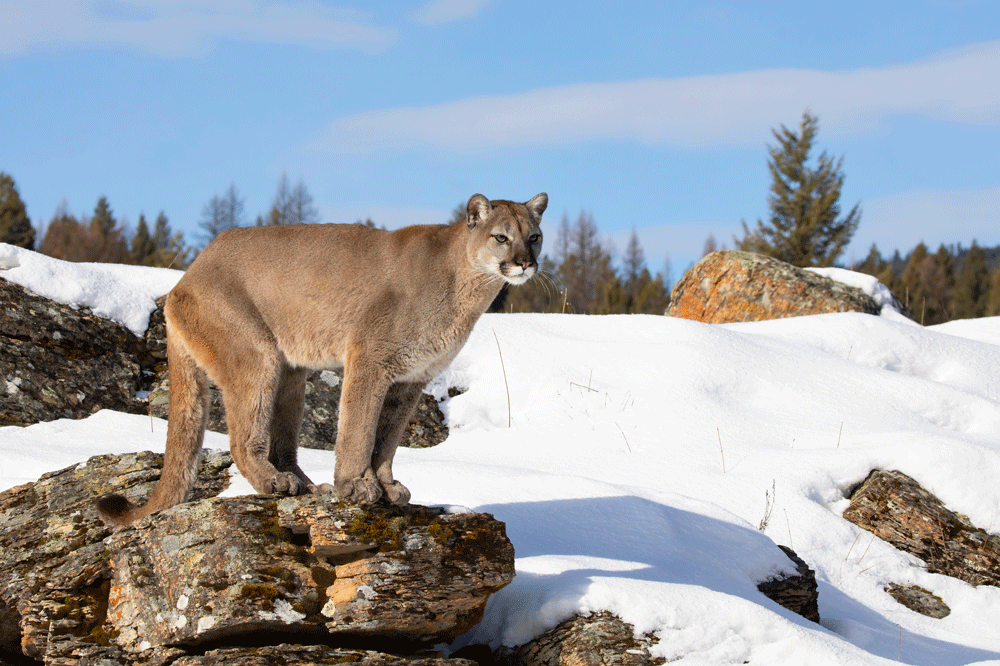
Also known as cougars, panthers and pumas, mountain lions are sleek, tan-colored cats built for stealth and speed. They primarily hunt deer and elk, often at night, and can sprint up to 50 mph or leap 40 feet in one bound. Though rarely seen, they’re an essential part of Montana’s wild ecosystem.
WILDLIFE SAFETY
- View wildlife from the safety of your car or from a safe distance. Stay at least 100 yards away from bears and 25 yards from all other wildlife, such as mountain goats and bison.
- Never approach, touch or feed wildlife, even when an animal does not seem to be threatened by your presence.
- Let wildlife know you’re nearby. When hiking, be sure to bring a friend, carry bear spray, stay on designated trails and make noise at regular intervals.
DRIVING SAFETY AND WILDLIFE COLLISIONS
Wildlife is most active at dawn and dusk—drive with extra caution during these hours.
- Follow posted speed limits and watch for animal crossing signs.
- Keep your headlights on in low- or no-light conditions, and use high beams when there is no oncoming traffic for better visibility.
- Continuously scan the roadway ahead, as well as the roadsides and ditches, for movement. If you see one animal, slow down—others are likely nearby.
Staying alert and aware helps protect both you and Montana’s wildlife.
Please note: We ask that all our visitors and residents recreate responsibly by being mindful of the following: know before you go; plan ahead; play it safe; leave no trace; tread lightly; and help build an inclusive outdoors.
October 20, 2025
Related: About, Bison Range, Glacier National Park, Missoula, Moiese, Montana, Outdoor Fun, Recreate Responsibly, Vacation, Wildlife
Comments