

Western Montana offers a landscape shaped by glaciers, rich cultural heritage and countless opportunities for discovery. For many travelers, a visit to Glacier National Park naturally pairs with time across the border in Canada’s Waterton Lakes National Park. Together, these protected places form the Waterton-Glacier International Peace Park—an interconnected ecosystem known for its dramatic terrain, wildlife habitat and shared stewardship.
Planning a two-nation trip is a meaningful way to experience the region’s diverse scenery, from Montana’s iconic Going-to-the-Sun Road to Alberta’s striking Red Rock Canyon. Below are helpful considerations for making the journey smooth, responsible and memorable.
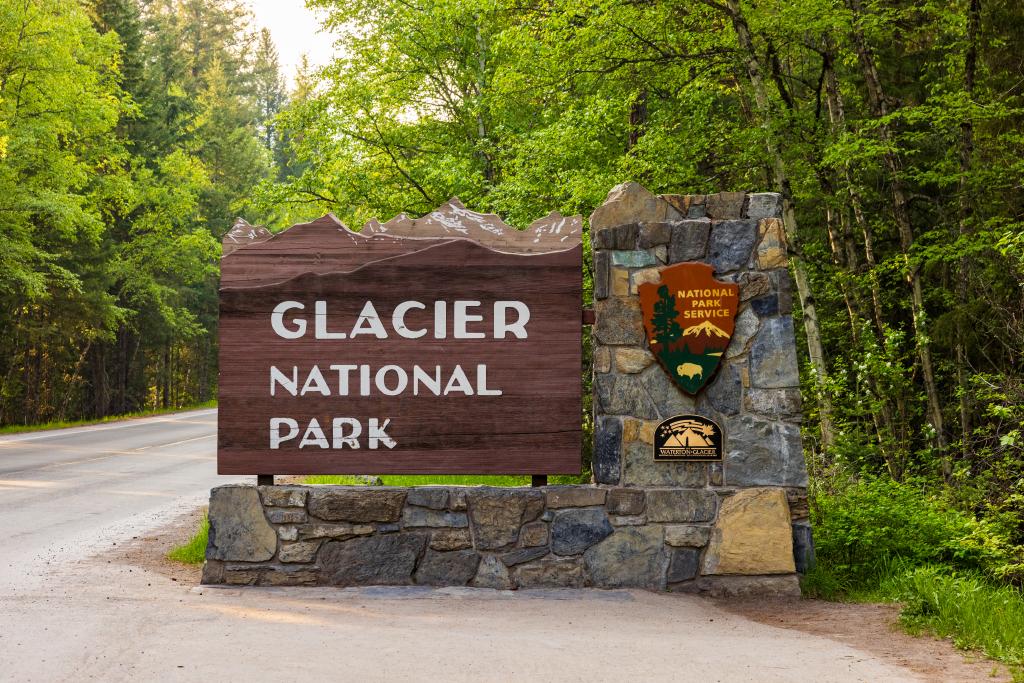
WATERTON-GLACIER INTERNATIONAL PEACE PARK
Designated in 1932 as the world’s first International Peace Park, this shared landscape celebrates cooperation between the United States and Canada. Visitors may explore each park separately or experience the connection between them.
From Waterton, a seasonal scenic boat cruise crosses Upper Waterton Lake to Goat Haunt on the U.S. side. The Prince of Wales Hotel—an iconic landmark overlooking the lake—offers sweeping Rocky Mountain views and a historic setting for an overnight stay or afternoon tea. Advance reservations are strongly encouraged.
EXPLORING WATERTON LAKES NATIONAL PARK
Just across the border from Glacier National Park, Waterton Lakes National Park offers a complementary experience shaped by deep valleys, windswept prairies and dramatic peaks. The park is known for its rich biodiversity, extensive trail network and the striking contrast between open grasslands and rugged mountains. Visitors can explore highlights such as Red Rock Canyon, the Crypt Lake Trail and the calm waters of Upper Waterton Lake. The townsite of Waterton provides access to dining, lodging and lakefront views, creating a welcoming base for adventure. Together with Glacier, Waterton forms an interconnected landscape where natural and cultural history are shared across borders.
GLACIER NATIONAL PARK: GOING-TO-THE-SUN ROAD
The Going-to-the-Sun Road is one of Glacier National Park’s most celebrated routes, winding through glacial valleys and past waterfalls, alpine meadows and towering peaks. Red Bus Tours provide a historic way to experience the road, while experiences offered by Sun Tours share an American Indian perspective on the region’s cultural and ecological significance.
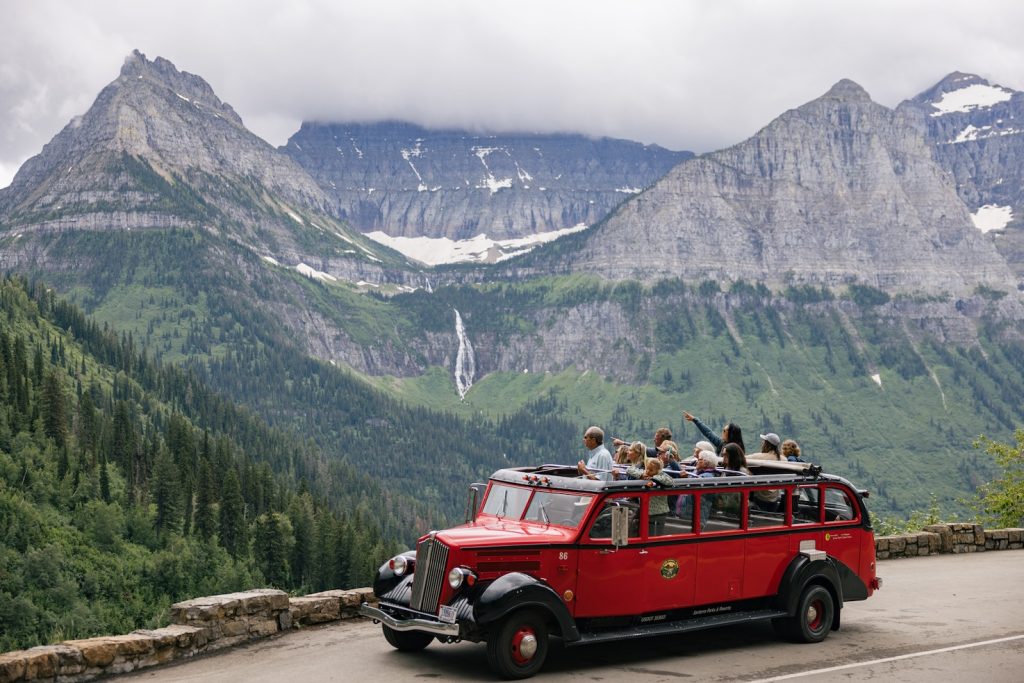
MORE WAYS TO EXPLORE GLACIER NATIONAL PARK
Beyond the Going-to-the-Sun Road, Glacier National Park offers thousands of acres to explore, including more than 700 miles of trails, 762 lakes, 563 streams, over 200 named waterfalls and 25 named glaciers. Glacier Park Boat Company operates seasonal boat tours on Lake McDonald, St. Mary Lake, Two Medicine Lake and Swiftcurrent Lake. Remote areas like the North Fork provide quiet scenery and access to places such as Bowman Lake, a beautiful setting for paddling, camping and hiking.
Polebridge—known for its historic mercantile and baked goods—serves as a gateway to this section of the park. Seasonal road conditions vary, so be sure to check current status updates before heading out.
NATIONAL PARK ENTRANCE FEES: WHAT TO KNOW BEFORE YOU GO
Both Glacier National Park and Waterton Lakes National Park require entrance fees, but each park operates under a different system.
In Glacier National Park, visitors pay a park entrance fee. Nonresidents must pay higher fees than residents. Fees vary by vehicle type and length of stay, and passes can be purchased in advance or at park entrances. Separate vehicle reservation requirements may also apply for certain areas or times of year, so it’s important to plan ahead.
Waterton Lakes National Park operates under Canada’s national park system, which uses daily admission or Parks Canada passes. Fees are charged per person rather than per vehicle, and U.S. national park passes are not valid in Canadian parks.
Before your trip, check the official Glacier National Park and Parks Canada websites for current fees, pass options and any reservation requirements. Understanding how each park’s system works will help you budget appropriately and avoid surprises at the gate.
CROSSING THE BORDER
Several ports of entry connect northwest Montana with Canada. Two are accessible only by hiking in the backcountry or by boat, while the most common options for drivers include:
Port of Roosville (U.S. Customs and Border Protection)
Located north of Eureka, this crossing provides access to British Columbia and routes toward Kootenay National Park and Banff National Park.
Chief Mountain Border Crossing (AB-6 / MT-17)
This seasonal crossing directly links Glacier National Park and Waterton Lakes National Park. It is one of the most convenient routes for visitors who want to explore both parks in a single trip. Always check current operating hours and seasonal closures before you travel.
Ensure your passport is valid before your trip. Requirements may vary, so review border regulations and hours of operation in advance. For additional guidance on international travel from Western Montana, visit our International Border Crossings page.
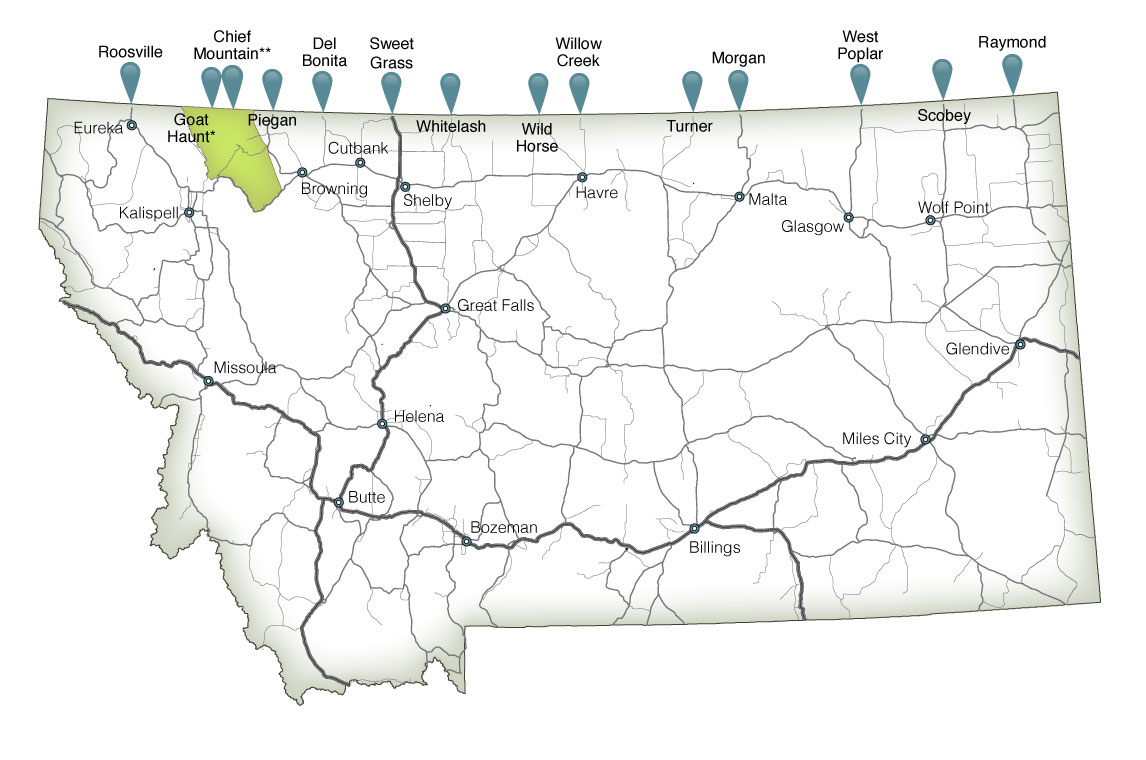
**Crossing closes at the end of September and reopens mid-May.
WATCHING THE WEATHER
Spring and fall are exceptional times to visit both Glacier and Waterton Lakes. In spring, typically emerging in early May, wildflowers begin to bloom and trails open gradually as snow recedes. Autumn arrives in early September, bringing vibrant displays from tamarack and aspen trees. While the weather can be variable during these shoulder seasons, the quieter experience and brilliant colors make them rewarding times to explore.
Please note:We ask that all our visitors and residents recreate responsibly by being mindful of the following: know before you go; plan ahead; play it safe; leave no trace; tread lightly; and help build an inclusive outdoors.
Updated January 16, 2026
August 28, 2017
Related: Getting Around, Glacier National Park, Montana, Polebridge, Uncategorized, Vacation
Comments